

Maybe it happened gradually. A string of small decisions, a handful of unchallenged habits, years of going through the motions — and then one day you surface and look around and think: how did I end up here? This isn't the story I meant to be living.
Or maybe it happened all at once. Something broke, something ended, something arrived uninvited — and the plot you thought your life was following turned out to be a lot more fragile than you'd assumed.
Either way, the feeling is disorienting. You're not sure whether to push forward, turn back, or just stop and wait for something to make sense again.
If any of that resonates, I want to tell you about something that happened in Jerusalem about two thousand years ago — and why it might actually matter to you right now.
The Man Who Never Lost the Plot
Whatever you think of Jesus — whether you grew up in church, walked away from it, or never gave it much thought — one thing stands out when you read the accounts of his life: the man had an unusual clarity about who he was, what mattered, and what he was doing.
When Jesus arrives in Jerusalem in the days before his death, the city is buzzing with competing agendas. The Roman authorities are worried about order. The religious establishment is trying to hold traditions together under occupation. Political revolutionaries want insurrection. His own followers are confused.
And Jesus, amid all of it, just… keeps going. Undistracted. Unhurried. Like someone who knows exactly where they're headed and why.
For people who feel unmoored, that kind of groundedness is quietly compelling. Even if you're not sure what to make of Jesus theologically – what you really believe about him – there’s something worth paying attention to in someone who simply never loses the thread.
The Temple Moment
One of the first things Jesus does when he enters Jerusalem is walk into the temple — the great religious center of the city — and cause a scene.
He overturns the tables of the money changers. He drives out the merchants. And he says, with obvious frustration: this place was meant to be a house of prayer — and you've turned it into something else entirely.
It's a jarring image, and it's easy to read it as just a moment of righteous anger at blatant corruption. But there's something deeper going on.
The temple, in the tradition Jesus was part of, was understood as the place where heaven and earth touched. Where ordinary people could come and actually encounter God — not through a priest acting as a gatekeeper, not after proving they were worthy, but openly, directly, as themselves.
What Jesus is furious about is that this access has been quietly closed off. The space that was supposed to welcome everyone had been turned into a system that served the people running it. The poor were priced out. Outsiders were pushed to the margins. Skeptics looking on saw the whole thing and concluded — reasonably — that it was a racket.
Jesus tears it all down to say: this was never supposed to work like that. There is a seat here for you. There always was.
A Seat at the Table
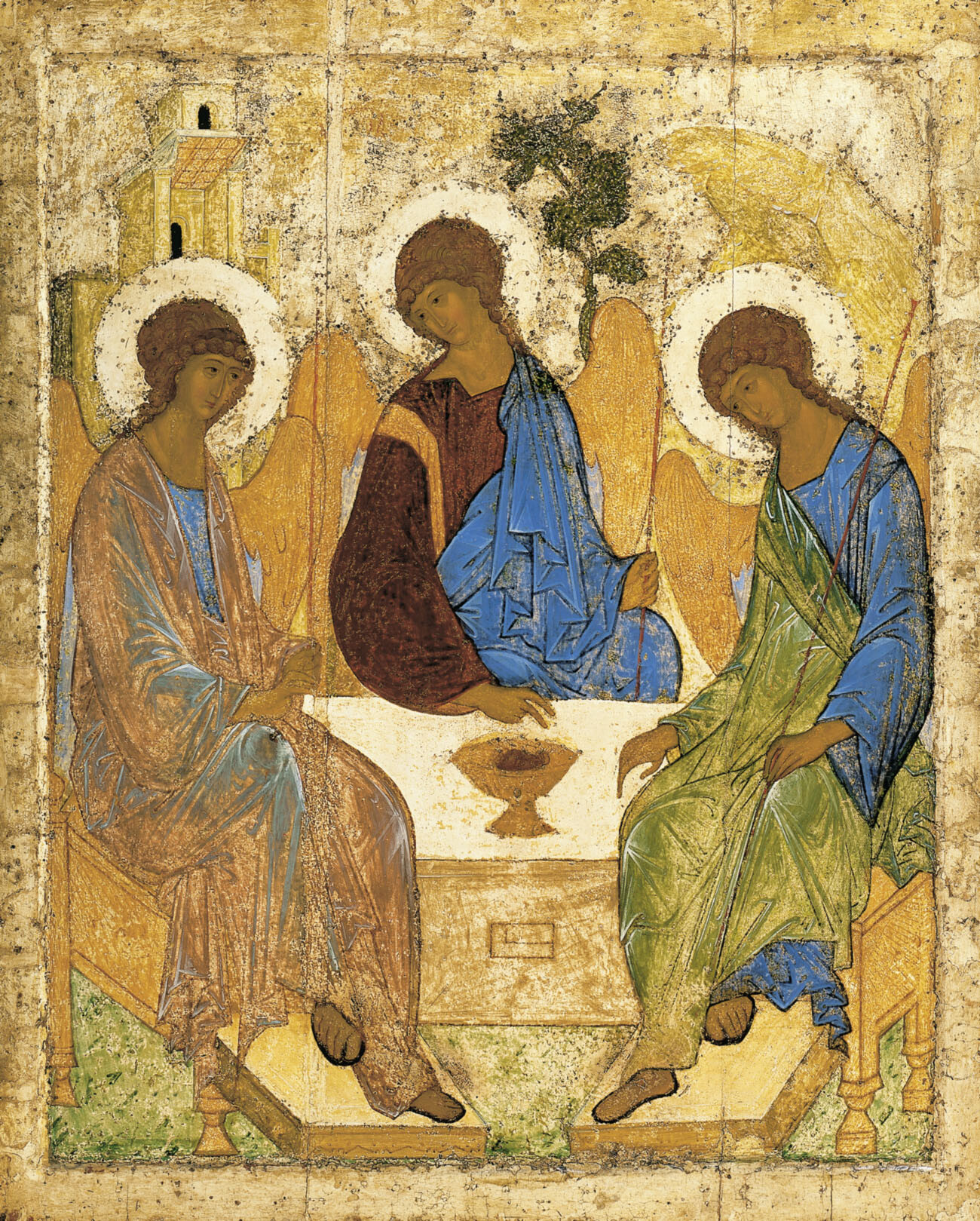
There's a painting made by a Russian artist named Rublev in the 15th century. It depicts the Trinity — Father, Son, and Spirit — as three figures seated around a table, sharing a meal. What makes it remarkable is the composition: the three figures are arranged so that there is an open space at the table, facing the viewer. An invitation.
That image is essentially what Jesus was pointing to when he cleared the temple. At the heart of existence, before any rules to follow or a system to navigate, God starts with relationship: an invitation to sit down at the table with Him.
Prayer, then, isn't a religious performance or a transaction where you ask for things. It's just — pulling up a chair. Bringing whatever you've got: your confusion, your grief, your questions, the version of your story that isn't going the way you planned. And sitting with a God who genuinely wants you there.
Someone once described it simply as: tell him your struggles. Weep with him. Laugh with him. And take time to listen as he tells you your story as he sees it.
The noise of those overturning tables outside the temple is the sound of someone fighting for your seat at the table.
What This Might Mean for You
Here's the honest thing: you don't have to have it figured out to start - to take your seat at the table. One of the great Christian mystics, Teresa of Ávila — a woman who spent her whole life in prayer — said that we are all beginners when it comes to prayer. That's not a warning; it's an invitation.
If your life has lost the plot, Christianity's answer isn't a program or a self-improvement plan. It's an open door to a relationship. And it begins with four honest phrases — no expertise required, no religious background assumed:
God, I need you.
This is where it starts — not with confidence, but with honesty. Acknowledging that willpower, strategy, and self-sufficiency haven't been enough. That you're not okay on your own. That's not weakness; it's the most truthful thing most of us could say.
God, forgive me.
Not a grovelling admission of unworthiness, but a recognition that some of what's gone wrong has involved choices — yours. Things said, things done, things left undone. The Christian claim is that forgiveness is not something you have to earn first; it's something already offered, waiting to be received.
God, thank you.
Gratitude reorients us. It shifts the focus from everything that's broken to the fact that there is still goodness — that Jesus came, that the table exists, that the seat is open. Even in the middle of a difficult season, this phrase is a small act of trust that something good is at work.
God, lead me.
This is the forward-facing one. Not a demand for a detailed roadmap, but a willingness to be guided — to stop navigating entirely alone. It's an admission that you'd like help finding the plot again, and a belief that help is available.
Four phrases. One honest conversation. That's where it begins — not at the end of a long theological journey, but right here, right now, wherever you are.
The seat at the table has always been yours. You're welcome to sit down.
This blog post was adapted from a recent sermon by Pastor Tom VanAntwerp. If you’d like to explore the topic further, click here to watch the sermon video.



Login To Leave Comment